Picture a junior designer in Jaipur who needs a day off. She types a long, rambling email, forgets the subject line and hits send. Her manager reads it twice and still isn’t sure which day she wants.
I’ve seen emails like that cause real confusion. Nobody was being rude, the message was just unclear. Good professional email writing isn’t about fancy vocabulary. It’s about being clear, polite and easy to act on. Here’s a simple guide for 2026, with formats and examples you can copy and adjust.
What Makes an Email Professional?
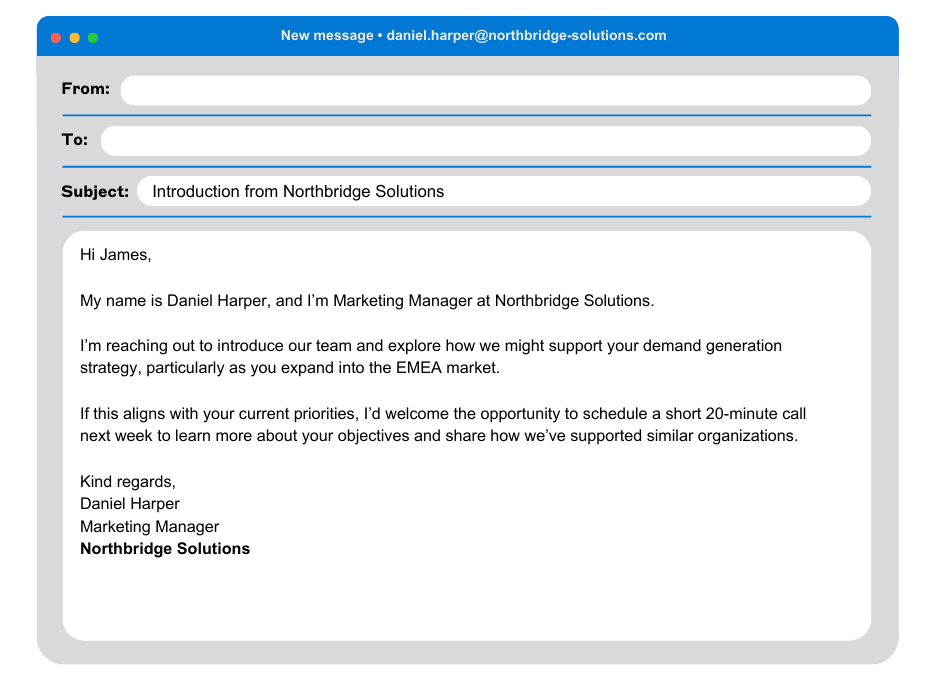
A professional email has a clear subject line, a polite greeting, a short body that states the purpose early, a specific request or next step and a proper sign-off. It’s brief, respectful and free of slang and typos. The reader should know what you want within the first two lines.
That’s it. Most bad emails fail on clarity, not on grammar. Keep that in mind for everything below.
The Basic Email Format
Every email follows the same skeleton:
- Subject line: specific and short
- Greeting: “Dear Mr. Sharma,” or “Hi Priya,”
- Opening line: why you’re writing
- Body: details, kept to two or three short paragraphs
- Closing line: what you need and by when
- Sign-off and signature: name, role and contact details
Use “Dear” for formal or first-time contacts, and “Hi” for colleagues you know well. When in doubt, go slightly more formal. It’s easier to relax later than to repair a bad first impression.
Writing a Subject Line That Gets Opened
Your subject line decides whether the email gets read today or buried. Make it specific.
- Weak: “Question”
- Better: “Question about the March invoice (INV-204)”
- Weak: “Meeting”
- Better: “Request: 20-minute call on Thursday about the website update”
Keep it under about 8 words where possible, and put the key detail first. Strong professional email writing treats the subject line as the headline, because most people decide in two seconds whether to open.
Example 1: Requesting Leave
Subject: Leave request: 12 and 13 March
Dear Mr. Verma,
I’d like to request leave on 12 and 13 March for a family function. I’ll finish the pending design files before I leave and share my handover notes with Neha.
Please let me know if this works.
Thank you,
Ritu Sharma
Short, specific and easy to approve. Notice it states the dates, the reason and the plan for the work.
Example 2: Following Up on an Email
Subject: Following up: proposal sent on 5 March
Hi Amit,
I wanted to check whether you had a chance to review the proposal I sent on 5 March. I’m happy to answer any questions or adjust the scope.
Could you share an update by Friday? That would help me plan next month’s schedule.
Regards,
Karan
Has someone ever ignored your first email? It happens constantly. A polite, specific follow-up after three to five working days is normal, not pushy.
Example 3: Asking for a Meeting or Information
Subject: Request: 15-minute call about your marketing services
Dear Ms. Kapoor,
I run a small cafe in Malviya Nagar and I’m looking for help with Instagram marketing. I saw your work with local brands and liked it.
Would you have 15 minutes for a call this week? I’m free Wednesday or Thursday afternoon.
Best regards,
Anil Gupta
This works because it explains who you are, why you’re writing and offers specific times. In good professional email writing, you make it easy for the reader to say yes.
Example 4: Apologising for a Mistake
Subject: Correction to the invoice sent yesterday
Dear Mr. Joshi,
I’m sorry, there was an error in yesterday’s invoice. The correct amount is ₹18,500, not ₹21,500. I’ve attached the updated version.
Apologies for the confusion. Please let me know if you need anything else.
Regards,
Sneha
Own the mistake, give the fix and move on. Don’t over-apologise or make excuses. Clients tend to trust people who handle errors calmly.
Tone, Length and Common Mistakes
Keep your tone polite and neutral. Avoid ALL CAPS, too many exclamation marks and emojis in formal emails. Skip phrases like “as per my last email,” which can sound irritated.
Common mistakes to avoid:
- Writing long paragraphs with no clear ask
- Forgetting the attachment you mentioned
- Using “Reply All” when it isn’t needed
- Sending without a proofread, especially names and numbers
Aim for under 150 words for most emails. I honestly think that if an email needs more than 200 words, a quick call might be better. Good professional email writing respects the reader’s time.
A Quick Checklist Before You Hit Send
Read your email once, then ask:
- Is the subject line specific?
- Is the main request in the first two lines?
- Are names, dates and amounts correct?
- Did I attach what I promised?
- Would I understand this if I received it?
Reading aloud helps catch awkward lines. It takes 30 seconds and saves embarrassment.
FAQs
How do I start a professional email?
Use a polite greeting like “Dear Mr. Sharma,” or “Hi Priya,” followed by a one-line reason for writing.
How long should a professional email be?
Usually under 150 words. Keep paragraphs short and put the main request near the top.
What is a good way to end a professional email?
Close with a clear next step, then “Regards,” “Best regards” or “Thank you,” followed by your name and contact details.
Should I use “Dear” or “Hi”?
Use “Dear” for formal or first-time contacts, and “Hi” for people you already know well.
How soon should I follow up if there’s no reply?
Typically after three to five working days, unless the matter is urgent.
Is it okay to use emojis in work emails?
In formal or client emails, avoid them. With close colleagues, an occasional one is usually fine.
Conclusion
To sum up, use a specific subject line, state your purpose early, keep it short and end with a clear next step. That’s the heart of professional email writing, and it gets easier with practice. Pick one example from this guide, adapt it to a real email you need to send today and read it aloud before sending. Which type of email do you find hardest to write? Tell us in the comments, and we’ll share a template for it.
Internal link suggestions:
- [link to a guide on how to write a cold email here]
- [link to a post on business communication skills here]
- [link to how to pitch to investors article here]
Image alt text:
- “Professional email writing format with subject line, greeting and sign-off”
- “Person typing a professional email on a laptop at a desk”
- “Checklist for reviewing a work email before sending”